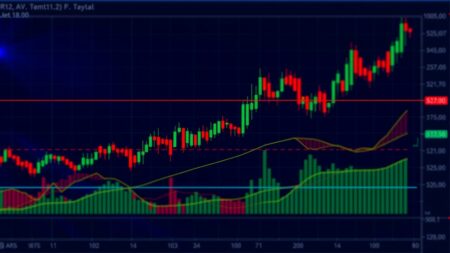



The S&P 500 Index has reached a significant figure, crossing the 7,000-point mark. This event represents a notable point in the history of the U.S. stock market and warrants examination. As a broad measure of the performance of 500 of the largest publicly traded companies in the United States, the S&P 500’s movement serves as a barometer for the health of the American economy and investor sentiment. Reaching such a high level is not an isolated occurrence but rather the culmination of various economic and market forces interacting over time.
The achievement of the S&P 500 index touching 7,000 is more than just a number; it embodies a period of sustained growth and investor confidence. Think of the index as a ship, and the 7,000 mark as a distant, significant lighthouse. Reaching it indicates progress along a long journey, not necessarily the end of it. This milestone reflects the collective performance of a substantial portion of the American corporate landscape. It suggests that the companies within the index have generally been able to generate profits, expand operations, and adapt to changing economic conditions, leading to an increase in their market valuations.
What the S&P 500 Represents
The S&P 500 is a market-capitalization-weighted index. This means that companies with larger market capitalizations have a greater influence on the index’s movement. When these large companies perform well, they can significantly lift the entire index. The 500 companies included are diverse, spanning various sectors of the economy, from technology and healthcare to financials and consumer goods. This broad representation makes the S&P 500 a widely accepted benchmark for the overall U.S. equity market. Its movements are closely watched by investors, economists, and policymakers alike, providing insights into the direction of the economy.
Investor Psychology and Milestones
Reaching round numbers like 7,000 can also have a psychological impact on investors. These figures often act as perceived points of validation or concern. For many, the steady climb towards such a benchmark reinforces optimism, encouraging further investment. Conversely, a significant fall from such a level could trigger anxieties. However, it is important to remember that these are psychological levels rather than fundamental economic triggers. The actual underlying value and performance of the companies in the index are what truly matter in the long run. The 7,000 mark, like previous milestones, is a point of reflection, a landmark on the road of market progression.
The ascent of the S&P 500 to 7,000 is not a singular event driven by a solitary factor. Instead, it is the result of a complex interplay of economic conditions, corporate performance, and monetary policy. These forces act in concert, creating an environment where stock valuations can rise. Understanding these drivers is crucial for comprehending the broader market narrative.
Corporate Earnings and Profitability
At the core of stock market gains lies corporate profitability. When companies increase their earnings, they become more valuable, and their stock prices tend to rise. This has been a consistent theme driving the S&P 500 upwards. Innovations, efficient operations, and strong consumer demand have allowed many constituent companies to grow their revenue and improve their profit margins. This sustained period of earnings growth provides the fundamental basis for higher stock valuations. The engine of the economy, made up of these companies, has been running efficiently, producing valuable output.
Economic Growth and Consumer Spending
A healthy economy provides a fertile ground for stock market growth. Robust economic expansion, characterized by rising GDP, low unemployment, and increasing consumer spending, directly benefits the companies in the S&P 500. When consumers have more disposable income and confidence in the future, they spend more, driving sales and profits for businesses. This positive feedback loop, where economic growth fuels corporate success, which in turn can further stimulate the economy, has been a key factor in the market’s upward trajectory. A strong economy is like a steady tailwind for the market’s ship.
Monetary Policy and Interest Rates
The actions of central banks, particularly the Federal Reserve, play a significant role in influencing market conditions. Historically, periods of low interest rates have made borrowing cheaper for companies, encouraging expansion and investment. Lower interest rates also make fixed-income investments, such as bonds, less attractive, leading investors to seek higher returns in the stock market. This shift of capital into equities can drive up stock prices. While interest rate policies can change, the era of accommodative monetary policy has, for an extended period, been a supportive factor for the equity markets.
The milestone of the S&P 500 reaching 7,000 carries several implications for various stakeholders, from individual investors to the broader economic landscape. It signals a period of prosperity but also prompts considerations about sustainability and future potential.
For Individual Investors
For individual investors, a rising S&P 500 generally translates to increased portfolio values. Many retirement plans and investment accounts are tied to the performance of this index. A higher S&P 500 means that retirement savings are potentially growing, and investments are performing well. However, it also raises questions about market valuations. When the market reaches new highs, some investors may become concerned about potential corrections or pullbacks. This prompts careful consideration of investment strategies, risk tolerance, and the long-term outlook. It’s a time for both celebration of gains and sober assessment of future prospects.
Impact on the Economy
A strong stock market, as indicated by the S&P 500’s performance, can have a positive impact on the broader economy. Increased investor confidence can lead to higher consumer spending and business investment. Wealth effects, where individuals feel wealthier due to rising asset values, can encourage discretionary spending. Furthermore, companies that have seen their stock prices rise may find it easier and cheaper to raise capital through stock offerings, fueling further growth and job creation. The market’s health often reflects and can contribute to the overall economic well-being.
Pension Funds and Institutional Investors
Pension funds, endowments, and other institutional investors rely heavily on equity market performance to meet their long-term obligations. A sustained bull market, culminating in record highs for the S&P 500, generally improves their financial standing. However, these institutions also face the challenge of managing risk and ensuring diversification. As the market climbs, they must continuously evaluate their asset allocation and consider strategies to preserve capital while still seeking growth.
To genuinely understand the magnitude of the S&P 500 reaching 7,000, it is beneficial to place it within historical context. Market milestones are not unprecedented events, and comparing current achievements to past ones reveals patterns of growth and adaptation.
Past Market Highs and Recoveries
The S&P 500 has experienced numerous peaks and troughs throughout its history. From the dot-com bubble of the early 2000s to the financial crisis of 2008, the market has weathered significant downturns. Each recovery, however, has ultimately led to new highs, demonstrating the resilience of the U.S. economy and its capital markets. The journey to 7,000 is a testament to this cyclical nature, where periods of growth compensate for periods of decline. Each previous highest point served as a stepping stone to the next.
Growth Rates and Duration of Bull Markets
When analyzing market milestones, it is also important to consider the duration and growth rate that led to that point. The current period of reaching 7,000 may have followed a relatively long and steady climb, or it might represent a more rapid ascent. Comparing the speed and consistency of growth to previous bull markets provides a richer understanding of the current market dynamics. Different bull markets have different flavors, some more tempered and steady, others more volatile and passionate.
The S&P 500’s achievement of 7,000 has been met with a range of expert opinions, each offering a perspective on its implications and future trajectory. These analyses often focus on the underlying economic fundamentals and potential future headwinds or tailwinds.
Assessment of Current Valuations
Financial analysts and economists are evaluating whether the current levels reflect the underlying value of the companies in the S&P 500. Some might argue that valuations are at historical highs and could be considered stretched, while others may point to continued earnings growth and favorable economic conditions that justify these levels. The debate often centers on whether the market is in a bubble or experiencing sustainable growth. This is akin to evaluating the structural integrity of a building rather than just its height.
Forward-Looking Projections
Experts are providing projections for the future performance of the S&P 500. These predictions are influenced by a multitude of factors, including anticipated interest rate changes, geopolitical developments, technological advancements, and potential shifts in consumer behavior. While precise forecasts are impossible, these analyses offer valuable insights into the potential scenarios that investors should consider. The future is a landscape often shrouded in mist, and these projections are attempts to map its contours.
The S&P 500 has reached a new peak, but the journey for investors and the market continues. The future is rarely a straight line, and navigating the path forward will involve addressing potential challenges and capitalizing on emerging opportunities.
Potential Headwinds for the Market
While the current environment may be favorable, several potential headwinds could impact the S&P 500’s future performance. These can include rising inflation, unexpected economic slowdowns, geopolitical instability, changes in government policy, and advancements in disruptive technologies that fundamentally alter industries. Being aware of these potential obstacles is crucial for maintaining a balanced investment perspective. The ship of the market always faces the possibility of encountering storms.
Opportunities for Future Growth
Despite potential challenges, opportunities for continued growth also exist. Innovation, emerging markets, and evolving consumer needs can create new avenues for corporate expansion and profitability. Companies that adapt effectively to changing landscapes and embrace new technologies are likely to be the long-term beneficiaries. The future always holds seeds of new growth, waiting for the right conditions to sprout.
The S&P 500’s crossing the 7,000 mark is a significant event, reflecting sustained economic activity and investor confidence. It is a testament to the resilience and adaptability of American corporations. However, like any market milestone, it serves as a point of reflection, prompting continued analysis of economic drivers, potential risks, and future opportunities. The market’s journey is ongoing, and each high mark is a marker on a continuously unfolding map.